Podartist79
Western Thunderer
Thank you Gary.
The last photo is my favourite, glad you like it.
The last photo is my favourite, glad you like it.



Wow! This is absolutely brilliant, The final photo in the group, is superb, the lighting, everything, its the real thing!
Great modeling from Mick, and stunning weathering from yourself.
Gary
Thank you Bob.Wonderful weathering. I have to ask what paint mixture did you use for the wheels, rods and valve gear on the Standard Class 3 and WC
Brush painted or airbrushed,
Regards
Bob
Sorry Paul,Ref the handrails , surely the bends have been caused by the driver and fireman lugging themselves up into the cab .
Fantastic work Neil , is the sheen on the wheels metalcote paint or lead pencil ?

Ooh , I've never tried that . I've used metalcote and lead pencil but next time I'll try graphite powder .Sorry Paul,
Missed this.
It’s Metalcote, then buffed with graphite powder.
It’s Metalcote, then buffed with graphite powder.
Not sure exactly what kind of lead you mean Paul, but just to mention that powdered graphite can be a bit messy, but 'pure graphite' (9B) pencils with a very broad 'lead' can be had in artist's supplies shops and are much more controllable for smaller details. But I expect everyone already knows that!I've used metalcote and lead pencil

And then there was the Great Graphite Storm, of 2007 (or maybe 2008)Appologies as slightly off topic but a having asupply of graphite powder is also useful for lubricating locks.

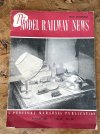
I painted a number of 'black' North Eastern locos in very dark blue (Humbrol Coal Black with a bit of Midnight Blue) as the layout was set in winter to help give a cooler look to them which winter skies and light often give.In the old Model Railway NEws for march or April 1969 ,the cover showed Oliver Cromwell, a green locomotive, but the colour appeared a definite shade of blue. The caption mentioned this fact. I still have my copy somewhere as it seemed so remarkable. a trick of the sunlight ……….
Perhaps a step too far for most “weatherers” ???????
Thank you Larry, very kind.Texture, colouring....It's all been said. When it comes to weathering locos, you're the tops.

The outside light really helps bring out the detail in the photos.
In normal lighting conditions (layouts, most display cabinets) the nuance and detail I try to create tends to get lost.