
You are using an out of date browser. It may not display this or other websites correctly.
You should upgrade or use an alternative browser.
You should upgrade or use an alternative browser.
7mm Pencarrow - Cornish BR(S)
- Thread starter Pencarrow
- Start date

Pencarrow
Western Thunderer
Looking along the line of track using a small mirror also tends to show up kinks and such like that the naked eye misses.
I think the mirror overcomes the tendency to see what you expect to see.
Problem is the view in the mirror is still blurred ;-p
Pencarrow
Western Thunderer
Chris
That is exactly what I found when laying my track (albeit outside) I now digitally snap everything and look at it on the computer before permanently fixing it down, a hugely useful aid to track laying in my experience.
All looking good by the way, I have to confess to feeling a bit sceptical about this scheme on the basis of there being too much track in too little a space, but as you have developed the setting around it I'm beginning to "believe" in it more and more.
Simon
Hi Simon, I had loads of doubts myself before finally committing to this trackplan which is why I built a mock up first. It is however a fairly large space (in a domestic environment) at 4m x 1m scenic area, and it's effectively just a loop and 4 sidings. I'm sure there are many that would kill for the space I have!
Most of the 7mm layouts I see on the exhibition circuit of a similar length either fit more track into the same space or the same track in narrower boards. There's a Bodmin North layout on the circuit that's very compressed depth-wise (from photos, I've not seen it live).
It's a home layout and, given the time and money that are going to be expended, needs to keep me entertained during both the build and operational phases and so needs a reasonable amount of track on it. A loop and a siding just wouldn't justify the effort involved or keep me entertained.
That said, the real Bodmin North was a semi-urban location and bounded by buildings or banks on all sides. It was big but still constrained. That's the look I'm after. The scenic side of things us what I'm most practiced at and I'm happy it will turn out ok in the end.
Looking at the fairly large spaces around the track that I've left for scenics, I'm happy with the balance. The buildings are all to scale (and very big!) and the platform width bang on the prototype, so no corners cut there.
I'm sure that some others given the same scenic area would add more track and look in disgust at the vast areas of wasted scenic space I have on my layout! ;-p
It's all a big compromise but I think I can, with careful scenic treatment, pull off an air of confined space. As the build gathers pace, the doubts are slowly being put to bed.

Pencarrow
Western Thunderer
Been a while since my last confession. A reasonable amount of progress on the layout itself despite a loss of mojo in March.
The platform has been formed and the first 3' of platform edging made. The ground has been formed along the front edge of the layout, particularly the sunken section on the 2nd board in from the fiddleyard. I've also started building the old wharf building which will be right at the front edge, right of centre.
A few photos of the area I've been working on together with an early mock up of the wharf building.


The platform has been formed and the first 3' of platform edging made. The ground has been formed along the front edge of the layout, particularly the sunken section on the 2nd board in from the fiddleyard. I've also started building the old wharf building which will be right at the front edge, right of centre.
A few photos of the area I've been working on together with an early mock up of the wharf building.


Pencarrow
Western Thunderer
Bags of character.
Thanks Simon, i do like this sort of mixed up building. Lots of different materials: timber, stone, slate, brick, render. And not much perfectly straight either, which is tricky using the thick Wills sheets.

7mmMick
Western Thunderer
So, another eagerly awaited installment!
Got bored with the backhead and so moved on. First some destruction, dismantling the parts that made up the fictitious Agenoria cab interior. These will be reused in the correct locations, although some parts will need modifying. I've had to chop the rear axle coil springs in half. Thankfully the casting was way too tall as only one was provided.
View attachment 59450
So that's the pile of bits. Not so obvious (deliberately) are the locating blocks added to the cab floor to help position the cab.
Also now missing are the plates that joined the cab sides at the foot of the entrance. This will allow me to add the flooring and sand box fillers.
Hi Chris,
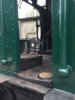
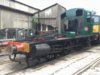
I know you've been mostly layout building recently but I've just been on holiday to Cornwall and visited the South Devon Railway. I saw this and thought of you.....

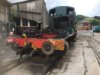
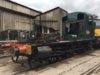
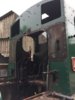

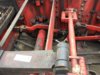



Attachments

Brian McKenzie
Western Thunderer
Very interesting photos, thanks. Not being totally familiar with GWR engineering practice, I was greatly intrigued with the double acting nature of the links off the weighshaft.
Were the arms forge welded to the shaft and was the shaft a forging or a turning?

-Brian McK.
Were the arms forge welded to the shaft and was the shaft a forging or a turning?
-Brian McK.

Peter Cross
Western Thunderer
Hi Chris,
I know you've been mostly layout building recently but I've just been on holiday to Cornwall and visited the South Devon Railway. I saw this and thought of you.....
View attachment 78004 View attachment 78005 View attachment 78007 View attachment 78008 View attachment 78009 View attachment 78010 View attachment 78011 View attachment 78012 View attachment 78013 View attachment 78014 View attachment 78015
It looks like they are having as trouble with a poorly designed kit as Chris is.
Pencarrow
Western Thunderer
Hi Mick, my apologies for the tardy response - as you say I've been head down working on the layout, storming along on the track building front.


Next task is a double slip which should be interesting for a novice track builder!
Thank you very much for those photos of the 1366, incredibly useful. Would you mind if I reposted them on my 1366 build thread? They may be very useful to others who tackle a 1366 in the future.
So the order of play going forward is likely to be:
1. Finish laying the track
2. Wire enough of the layout so that it can be used as a test track
3. Finish off my LSWR O2 and the GWR 1366
4. Whatever takes my fancy next!
Unfortunately due to a family event I can't make Telford this year so will miss meeting up with folk.
Many thanks again, much appreciated.
Next task is a double slip which should be interesting for a novice track builder!
Thank you very much for those photos of the 1366, incredibly useful. Would you mind if I reposted them on my 1366 build thread? They may be very useful to others who tackle a 1366 in the future.
So the order of play going forward is likely to be:
1. Finish laying the track
2. Wire enough of the layout so that it can be used as a test track
3. Finish off my LSWR O2 and the GWR 1366
4. Whatever takes my fancy next!
Unfortunately due to a family event I can't make Telford this year so will miss meeting up with folk.
Many thanks again, much appreciated.
Last edited:
Pencarrow
Western Thunderer
Very last minute but I unexpectedly gained planning permission to go to the G0G show.
Bumped into Dan Randall today at Telford, good to see him and have a chat or two. Spent too long on the Finney7 stand talking to the guys. Very impressed by the forward LSWR programme and the workmanship on display. Really pleased they are making a go of it.
Later on I had a chat with Pete Waterman and he's confirmed that Bulleid coaches are on his to do list in the near future. Great news.
Came home with a good collection of bits and bobs. A daring raid on the GoG executors stall saved me a fortune at C&L. Still had to visit C&L though - 35 minute wait whilst the proprietor very slowly served the two folk in front of me. Painful to watch and a number of folk walked off not being bothered to wait. No point pre-ordering for collection at the show as the orders are put together at the show whilst you slowly age. Must be costing him a fortune in lost sales.

Bumped into Dan Randall today at Telford, good to see him and have a chat or two. Spent too long on the Finney7 stand talking to the guys. Very impressed by the forward LSWR programme and the workmanship on display. Really pleased they are making a go of it.
Later on I had a chat with Pete Waterman and he's confirmed that Bulleid coaches are on his to do list in the near future. Great news.
Came home with a good collection of bits and bobs. A daring raid on the GoG executors stall saved me a fortune at C&L. Still had to visit C&L though - 35 minute wait whilst the proprietor very slowly served the two folk in front of me. Painful to watch and a number of folk walked off not being bothered to wait. No point pre-ordering for collection at the show as the orders are put together at the show whilst you slowly age. Must be costing him a fortune in lost sales.
Last edited:

Dan Randall
Western Thunderer
Bumped into Dan Randle today at Telford
Who he....?

Good to see & chat with you too Chris.
 I must say, that's a very impressive haul you came away with - all I've bought so far is three secondhand books, a cup of hot chocolate and a hot dog! Good to see all my Severn Valley and Finney7 chums too and as you say, the workmanship displayed on the Finney7 stand, was most impressive.
Bumped into Chris Hillier (Hurn Models), who told me his wife sadly died earlier this year and explains his attending as just a punter this time. He's slowly picking up the pieces and hopes to get back in the workshop soon and crack on with several unfinished projects.
Also bumped into Tony Geary, Nick Dunhill, Heather K and Dave Summers, so all in all, a great day was had. It must have been tiring though as I was laying on my hotel bed, flicking through one of my book purchases and trying to decide whether to grab a bite to eat at McDonalds or go for a three course in the adjacent Beefeater. Next thing I know, it's 04:40 in the morning! Oh well, it saved me a few bob I suppose?
Right, it's time to grab a couple more hours sleep before a much needed breakfast!
Regards
Dan
p.s. My good friend Richard Billington won 1st prize in the locos category of the competition with his ex GWR 28xx, built from a much enhanced Martin Finney kit. Nice one Rich.
Last edited:

Martin Field
Western Thunderer
Chris,
have you ever tried Foamex? It's not like Foam board, but is a self skinning PVA foam of a dense nature. It's much used in the signage business. I have several thicknesses courtesy of my son's best mate who gives us huge offcuts. It can be impressed with a variety of tools to represent brick, stone, shiplap and just about everything in between including stucco, rough or smooth by pushing sandpaper onto it. It's so much cleaner to use than fillers and Das type materials. I sent some to Iain Robinson and he immediately took it up for his professional work. I've used it for a local church model and a brick caff.
Cheers,
Martin
have you ever tried Foamex? It's not like Foam board, but is a self skinning PVA foam of a dense nature. It's much used in the signage business. I have several thicknesses courtesy of my son's best mate who gives us huge offcuts. It can be impressed with a variety of tools to represent brick, stone, shiplap and just about everything in between including stucco, rough or smooth by pushing sandpaper onto it. It's so much cleaner to use than fillers and Das type materials. I sent some to Iain Robinson and he immediately took it up for his professional work. I've used it for a local church model and a brick caff.
Cheers,
Martin
Pencarrow
Western Thunderer
Chris,
have you ever tried Foamex? It's not like Foam board, but is a self skinning PVA foam of a dense nature. It's much used in the signage business. I have several thicknesses courtesy of my son's best mate who gives us huge offcuts. It can be impressed with a variety of tools to represent brick, stone, shiplap and just about everything in between including stucco, rough or smooth by pushing sandpaper onto it. It's so much cleaner to use than fillers and Das type materials. I sent some to Iain Robinson and he immediately took it up for his professional work. I've used it for a local church model and a brick caff.
Cheers,
Martin
Hi Martin, yes I've acquired a good quality of foamex from display boards etc used at work. I know lots of folk rave about it and get good results but, having experimented with some, came to the conclusion that I prefer working in plasticard. It may be that I'm just used to working with plastic but I seem to be able to get the effects I want far quicker than with foamex, which seems to fight me back!
Out of interest what adhesive do you use to join it? I found that I couldn't get a good reliable bond with any of the usual solvents.
Martin Field
Western Thunderer
Chris,
You won't get a bond with solvents, but an impact adhesive will work well. Evo-Stik best and I've also used UHU Por, which is a foam specialised impact as used by the Depron foam model aircraft boys.
How do you find styrene for warpage? I always got that when I tried making wagons or coaches with it. Previous to Foamex I only used card for buildings, but never did stone ones, being an East Anglian!
Cheers,
Martin
You won't get a bond with solvents, but an impact adhesive will work well. Evo-Stik best and I've also used UHU Por, which is a foam specialised impact as used by the Depron foam model aircraft boys.
How do you find styrene for warpage? I always got that when I tried making wagons or coaches with it. Previous to Foamex I only used card for buildings, but never did stone ones, being an East Anglian!
Cheers,
Martin


Martin Field
Western Thunderer
Absolutely Osgood, but I didn't discover that until I moved up here. It is found in only a very small area and haven't done much architectural stuff since I've been up here.
But there's some in the chancel of the church where I was married and I had a crack at it when I first discovered Foamex by making half a window.
And tother day I chucked out the picture, doh!
Martin
Edited to say:- Traditionally, carr stone was built up about 2 or 3 feet dry then heavily pointed from behind, so it appeared from outside to use no mortar.
But there's some in the chancel of the church where I was married and I had a crack at it when I first discovered Foamex by making half a window.
And tother day I chucked out the picture, doh!
Martin
Edited to say:- Traditionally, carr stone was built up about 2 or 3 feet dry then heavily pointed from behind, so it appeared from outside to use no mortar.