Big Train James
Western Thunderer
As noted in the US Dabblings thread, I have recently gotten an Elegoo Mars 3 printer. GrahamMc has suggested I might contribute my insights here since Simon and others are considering the Mars 3 as well.
First I'll list out the specs of my setup, then move on to discuss the general printing experience and my impressions of the Mars 3, cleaning/curing station, and resin choices.
Elegoo Mars 3 printer ($350 from Elegoo, via Amazon, cheaper at the moment apparently )
)
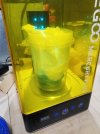
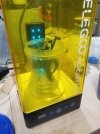
Elegoo Mercury Plus v2.0 2-in-1 wash and cure station ($150 from Elegoo, via Amazon, cheaper via Elegoo direct but not available in the US at the time)
Siraya Tech resin - Fast ABS-like Navy Grey (~$35-40 via Amazon)
Siraya Tech resin - Build Sonic Grey (~$35-40 via Amazon)
Siraya Tech resin - Sculpt Grey (~$35-40 via Amazon)
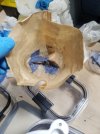
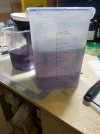
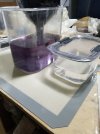
99% Isopropyl Alcohol for secondary and tertiary cleaning in tubs
91% Isopropyl Alcohol for primary cleaning in a spray bottle
Paint booth - for ventilation
Chitubox Pro slicer (1-year free subscription included with the printer)
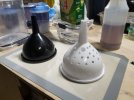
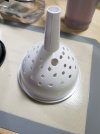
Various other sundries used to varying degrees, include respirator, lots of nitrile gloves, lots of paper towels, scraper, flush nippers, x-acto, hair dryer or heat gun (but I don't use the heat function), silicone mat, silicone spatula or scraper, paint brush, funnel, paint filters. What you have on your "other supplies" list can vary based on your process, as usual there is more than one way to do things. Somethings should not be negotiable, like the gloves, it would be really imprudent not to use them.
Running through Simon's bullet points from Post #1:
There are all sorts of resins available, and yes they most often exist for a specific reason. They can be formulated for fast cure times, or as water soluble clean-up (which does not mean wash off in your sink though), plant based, heat resistant, for investment casting, flexibility, hardness, strength, in short pretty much all the reasons most other types of plastics exist. For our purposes, usually, we want something that mimics the plastics we already typically use, which are ABS and styrene. Finish quality is also important, as is precision. Some other factors are in play, like smell and price, but there are enough options that those things need not have much impact on decision making.
Grey ABS-like resin is probably fine for 99.99% of what we do, so it's a good place to start, and is also one of the cheaper types of resin available. No point in spending big on test prints. Save that for later, when you are printing masters for burnout. The other two resins I listed above, the Sculpt and the Build, will be tested for print finish quality against the ABS-like Fast, and the Sculpt will also potentially be tested for it's qualities in mold making at some point.
For printer resolution, at this point I would only bother with a 50 micron machine if you want one of the larger form factor printers like the Elegoo Saturn. If you are going to get one of the typical small format printers, there is really no reason to not get a 4k version like the Mars 3 or similar. The difference in price between the Mars 3 and the Mars 2 Pro is currently about $50. There's just no point in choosing the old technology unless your budget is extremely tight.
Similarly, there's also no point in getting any printer that doesn't utilize a mono screen. The mono machines cure faster, so print faster. This will make a huge difference in print time, by a factor or 4 or more. The other advantage to mono screens is that they last longer. The screens are a consumerable, they will eventually wear out, so screen life cycle does matter. One thing I don't know, is whether color screens have anti-aliasing capability, if they do not, then that would be another plus for the mono types.
Curing and washing stations are often considered together, it might be more accurate to think in terms of post-processing stations. The printer manufacturers certainly think of them in that light, and with rare exception market cleaning and curing capability as 2-in-1 units that can do both. There are 3rd party options for curing enclosures, and both curing and cleaning stations can be home-built as well. Are either required? Explicitly, no, you could use the sun to cure your prints instead (don't). But the processes are required. Prints will need to be cured after cleaning, and prints will need to be cleaned of excess resin after printing and prior to curing.
Options for curing stations are any of the 2-in-1 units from the printer manufacturers, 3rd party options as linked above, or build your own. There are plenty of examples on the web for the latter. Get some UV LED light strips off of Amazon, some aluminum foil (I would use mylar instead), and build an enclosure from foam-core or a cardboard box, or find a nice sized bucket or bathroom trashcan. People often say to get a small turntable as well, to rotate the part and get exposure to all sides, but I don't think it's necessary for home-built units. The UV strip typically wraps around and around inside the enclosure, so the light comes from all sides anyway. One disadvantage of home-built units is that they lack timers, although I feel confident that something could be incorporated into the assembly to handle that task. You must make sure to get the proper wavelength LED's.
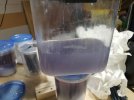
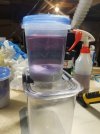
Cleaning stations, I wouldn't have paid for one if it wasn't part of the curing station I chose. That being said, I'm not disappointed that I have it. But honestly, a couple of food storage tubs with lids would suffice equally as well. The difference is that the commercial unit has an agitator that moves the cleaning fluid, as opposed to jiggling the part about in the tub of alcohol, and of course the same timer as used with the curing function. There's really not much more to it. Using the washing function also doesn't explicitly mean the model is fully clean. So when I do encounter stubborn liquid resin hiding in holes or tight spots, the small paint brush is used to brush and dab about in those areas to clean it out. In my opinion, a washing station is the epitome of "your mileage may vary", but I also think it should be the last criteria you consider when assembling a 3d printing "system".
As to what you use to clean, water or IPA or other, it depends on what type of resin you are printing with. Water would be the obvious choice for water-based resins, but it is also sometimes recommended in the curing process for various types of resins. Alcohol or Ethanol (NOT Methanol) are the options typically recommended for most other resins. The alcohol is usually recommended to be 95% plus IPA, although 91% seems to work okay as well. Methanol, or denatured alcohol, is a cheaper option, but can have other chemicals in the blend that are potentially more hazardous to our health. Then there are other cleaning agents like Simple Green, that have been discussed online. They came to the fore during the early days of Covid, since IPA was either impossible to get or outrageously expensive. I voted for 99% IPA for the most part, but more on that later. The short answer here is start with the manufacturer's recommendations and processes. Choose from there if they list options.
Smell? Depends on the resin. Many are being developed to have low odor, Siraya Tech emphasizes this feature for many of their resins. I've been using the Fast, and I haven't found the smell to be overwhelming at any time. I typically run the paint booth fan when I'm printing, and I typically wear a respirator when handling the liquid resin. However, I've forgotten to do one or the other or both at least once or twice, and didn't notice any particularly offensive odor when that happened. Also, in between print jobs, liquid resin sits in the vat in the printer, with the lid on, and I never notice any obvious smell. I can't speak to any other resin at this time, as I haven't used any others.
Conversely, I do have an issue with the odor from the IPA. I also find that the fumes from the IPA can irritate my throat with extended exposure. Again, the odor and fumes can be tolerated for a short time, but ideally as a best practice, I wear the respirator while I'm dealing with either the liquid resin or the alcohol.
Noise, yes it can be noisy. The Mars 3 is supposed to be quiet, but it's actually not especially so. It's not terrible either, but definitely noticeable. The real noise culprit is the spray booth fan. Mine is an older model, and it's quite loud. I don't know if newer units are quieter. If you had the printer running in a back room, I doubt the printer noise would be a concern by itself.
Space requirements, about what other people have suggested already. My work space is about 24" x 60". That includes the printer, wash and cure station, paint booth, several tubs of alcohol, and open work surface area. I could do with a bit less space, but not much, and more would always be nice but not necessary. It is nice if you have a cabinet underneath or shelving to hold supplies and tools.
Are there disadvantages? None that I can think of unless you would use the printer only very rarely, and by rarely I mean statistically equivalent to never. Then it might not warrant the cost of purchase. Better in that case to know a friend that has one.

 I guess the other consideration might be access to and fluency with the 3d cad needed to create the models. But in all other aspects, I'd recommend a 3d printer as an extremely useful and powerful tool. I would even argue paradigm shifting, and I don't think that's an exaggeration for myself.
I'm going to wrap this up for tonight. I'll come back tomorrow to talk about slicers, and other thoughts and observations about my experience to this point.
Jim
First I'll list out the specs of my setup, then move on to discuss the general printing experience and my impressions of the Mars 3, cleaning/curing station, and resin choices.
Elegoo Mars 3 printer ($350 from Elegoo, via Amazon, cheaper at the moment apparently
)Elegoo Mercury Plus v2.0 2-in-1 wash and cure station ($150 from Elegoo, via Amazon, cheaper via Elegoo direct but not available in the US at the time)
Siraya Tech resin - Fast ABS-like Navy Grey (~$35-40 via Amazon)
Siraya Tech resin - Build Sonic Grey (~$35-40 via Amazon)
Siraya Tech resin - Sculpt Grey (~$35-40 via Amazon)
99% Isopropyl Alcohol for secondary and tertiary cleaning in tubs
91% Isopropyl Alcohol for primary cleaning in a spray bottle
Paint booth - for ventilation
Chitubox Pro slicer (1-year free subscription included with the printer)
Various other sundries used to varying degrees, include respirator, lots of nitrile gloves, lots of paper towels, scraper, flush nippers, x-acto, hair dryer or heat gun (but I don't use the heat function), silicone mat, silicone spatula or scraper, paint brush, funnel, paint filters. What you have on your "other supplies" list can vary based on your process, as usual there is more than one way to do things. Somethings should not be negotiable, like the gloves, it would be really imprudent not to use them.
Running through Simon's bullet points from Post #1:
There are all sorts of resins available, and yes they most often exist for a specific reason. They can be formulated for fast cure times, or as water soluble clean-up (which does not mean wash off in your sink though), plant based, heat resistant, for investment casting, flexibility, hardness, strength, in short pretty much all the reasons most other types of plastics exist. For our purposes, usually, we want something that mimics the plastics we already typically use, which are ABS and styrene. Finish quality is also important, as is precision. Some other factors are in play, like smell and price, but there are enough options that those things need not have much impact on decision making.
Grey ABS-like resin is probably fine for 99.99% of what we do, so it's a good place to start, and is also one of the cheaper types of resin available. No point in spending big on test prints. Save that for later, when you are printing masters for burnout. The other two resins I listed above, the Sculpt and the Build, will be tested for print finish quality against the ABS-like Fast, and the Sculpt will also potentially be tested for it's qualities in mold making at some point.
For printer resolution, at this point I would only bother with a 50 micron machine if you want one of the larger form factor printers like the Elegoo Saturn. If you are going to get one of the typical small format printers, there is really no reason to not get a 4k version like the Mars 3 or similar. The difference in price between the Mars 3 and the Mars 2 Pro is currently about $50. There's just no point in choosing the old technology unless your budget is extremely tight.
Similarly, there's also no point in getting any printer that doesn't utilize a mono screen. The mono machines cure faster, so print faster. This will make a huge difference in print time, by a factor or 4 or more. The other advantage to mono screens is that they last longer. The screens are a consumerable, they will eventually wear out, so screen life cycle does matter. One thing I don't know, is whether color screens have anti-aliasing capability, if they do not, then that would be another plus for the mono types.
Curing and washing stations are often considered together, it might be more accurate to think in terms of post-processing stations. The printer manufacturers certainly think of them in that light, and with rare exception market cleaning and curing capability as 2-in-1 units that can do both. There are 3rd party options for curing enclosures, and both curing and cleaning stations can be home-built as well. Are either required? Explicitly, no, you could use the sun to cure your prints instead (don't). But the processes are required. Prints will need to be cured after cleaning, and prints will need to be cleaned of excess resin after printing and prior to curing.
Options for curing stations are any of the 2-in-1 units from the printer manufacturers, 3rd party options as linked above, or build your own. There are plenty of examples on the web for the latter. Get some UV LED light strips off of Amazon, some aluminum foil (I would use mylar instead), and build an enclosure from foam-core or a cardboard box, or find a nice sized bucket or bathroom trashcan. People often say to get a small turntable as well, to rotate the part and get exposure to all sides, but I don't think it's necessary for home-built units. The UV strip typically wraps around and around inside the enclosure, so the light comes from all sides anyway. One disadvantage of home-built units is that they lack timers, although I feel confident that something could be incorporated into the assembly to handle that task. You must make sure to get the proper wavelength LED's.
Cleaning stations, I wouldn't have paid for one if it wasn't part of the curing station I chose. That being said, I'm not disappointed that I have it. But honestly, a couple of food storage tubs with lids would suffice equally as well. The difference is that the commercial unit has an agitator that moves the cleaning fluid, as opposed to jiggling the part about in the tub of alcohol, and of course the same timer as used with the curing function. There's really not much more to it. Using the washing function also doesn't explicitly mean the model is fully clean. So when I do encounter stubborn liquid resin hiding in holes or tight spots, the small paint brush is used to brush and dab about in those areas to clean it out. In my opinion, a washing station is the epitome of "your mileage may vary", but I also think it should be the last criteria you consider when assembling a 3d printing "system".
As to what you use to clean, water or IPA or other, it depends on what type of resin you are printing with. Water would be the obvious choice for water-based resins, but it is also sometimes recommended in the curing process for various types of resins. Alcohol or Ethanol (NOT Methanol) are the options typically recommended for most other resins. The alcohol is usually recommended to be 95% plus IPA, although 91% seems to work okay as well. Methanol, or denatured alcohol, is a cheaper option, but can have other chemicals in the blend that are potentially more hazardous to our health. Then there are other cleaning agents like Simple Green, that have been discussed online. They came to the fore during the early days of Covid, since IPA was either impossible to get or outrageously expensive. I voted for 99% IPA for the most part, but more on that later. The short answer here is start with the manufacturer's recommendations and processes. Choose from there if they list options.
Smell? Depends on the resin. Many are being developed to have low odor, Siraya Tech emphasizes this feature for many of their resins. I've been using the Fast, and I haven't found the smell to be overwhelming at any time. I typically run the paint booth fan when I'm printing, and I typically wear a respirator when handling the liquid resin. However, I've forgotten to do one or the other or both at least once or twice, and didn't notice any particularly offensive odor when that happened. Also, in between print jobs, liquid resin sits in the vat in the printer, with the lid on, and I never notice any obvious smell. I can't speak to any other resin at this time, as I haven't used any others.
Conversely, I do have an issue with the odor from the IPA. I also find that the fumes from the IPA can irritate my throat with extended exposure. Again, the odor and fumes can be tolerated for a short time, but ideally as a best practice, I wear the respirator while I'm dealing with either the liquid resin or the alcohol.
Noise, yes it can be noisy. The Mars 3 is supposed to be quiet, but it's actually not especially so. It's not terrible either, but definitely noticeable. The real noise culprit is the spray booth fan. Mine is an older model, and it's quite loud. I don't know if newer units are quieter. If you had the printer running in a back room, I doubt the printer noise would be a concern by itself.
Space requirements, about what other people have suggested already. My work space is about 24" x 60". That includes the printer, wash and cure station, paint booth, several tubs of alcohol, and open work surface area. I could do with a bit less space, but not much, and more would always be nice but not necessary. It is nice if you have a cabinet underneath or shelving to hold supplies and tools.
Are there disadvantages? None that I can think of unless you would use the printer only very rarely, and by rarely I mean statistically equivalent to never. Then it might not warrant the cost of purchase. Better in that case to know a friend that has one.
I guess the other consideration might be access to and fluency with the 3d cad needed to create the models. But in all other aspects, I'd recommend a 3d printer as an extremely useful and powerful tool. I would even argue paradigm shifting, and I don't think that's an exaggeration for myself.I'm going to wrap this up for tonight. I'll come back tomorrow to talk about slicers, and other thoughts and observations about my experience to this point.
Jim
Last edited: