
You are using an out of date browser. It may not display this or other websites correctly.
You should upgrade or use an alternative browser.
You should upgrade or use an alternative browser.
Scorpio 2884 build
- Thread starter 3 LINK
- Start date

3 LINK
Western Thunderer
Cheers Howard, I have just finished work, so I will see what I can do.Better to copy the text contents of the .doc and paste them into the mesasge page Martyn. You can then attach each of the images individually - hope that helps! (BTW I can open and read your document and it looks good - but it is not the easiest way to do it!)
Howard
Thanks, Martyn.
3 LINK
Western Thunderer
I have been after a kit of a 2884 for a long time, originally Pete ( JLTRT ) told me he was going to bring one out, but it never materialised. So, I thought I would try the kit Scorpio had on offer, I only needed the loco as I already had a spare Finney 7 tender. Jeff at Scorpio was happy to supply just the loco.
On inspection the etches were crisp and clean and I couldn’t fault the price which included the Slaters wheels (optional extra). The only thing I wasn’t sure about was the method of using two rocking beams on both sets of drivers, and what was also different was that instead of the usual inside beam method these where sited on the outside of the frames and the plates (beams) also incorporated the brake shoes. Now I have been told these actually work very well but I decided to cut out the main frames and install Slater's brass horn guides and blocks, see photos below.
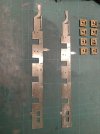
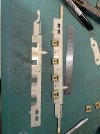
Below are the rocking beams supplied.

Below, I am setting out the datum for the height and spacing of the hornblocks and guides.
As per usual with me, it's one step forward two steps back. In all kits the mainframes have the axle holes already etched in place, whereas because of the rocking beam design I am left with no datum to work to, oh dear.
Obviously, this is a very crucial part of any build as I need to get the coupling rod spacing exactly spot on, and the ride height. So, I prepared the two main frames and temporarily tacked them together then I pinned the rocking beams behind of where they would normally be sited, this then gave me hopefully the correct spacing for the axles. Rather than using engineers blue which I find very messy, I use a felt tip pen to highlight areas that need marking and then scribe gently the exact markings. Right, so out with the piercing saw, wish me luck.
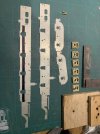
I have scribed on the mainframes exactly where the horn guides are to be spaced using the couplings rods that I always use from Bill at Premier Components, being an 8 coupled loco I like the rods jointed and you can’t beat milled rods in my opinion. So, using a piercing saw I gingerly cut out the opening for the horn guides, I was concerned about the ride height but what does help there is a small witness mark halfway up the Slater's horn guides
One of the frame spacers needed notching out as the hornguides protrude inwards, but not a problem.

And the final photo, shows the frames and rods in place.
Voila, one free-wheeling chassis, always a bonus when there aren’t any tight-spots or binding. I placed some weights on the chassis to compress the springs and the ride height is spot on, what a relief. I was out of my comfort zone because there were not the usual etched holes in the chassis to help with setting up the rods and ride height, so down tools and off to the garden for a beer or two.

Martyn.
On inspection the etches were crisp and clean and I couldn’t fault the price which included the Slaters wheels (optional extra). The only thing I wasn’t sure about was the method of using two rocking beams on both sets of drivers, and what was also different was that instead of the usual inside beam method these where sited on the outside of the frames and the plates (beams) also incorporated the brake shoes. Now I have been told these actually work very well but I decided to cut out the main frames and install Slater's brass horn guides and blocks, see photos below.
Below are the rocking beams supplied.
Below, I am setting out the datum for the height and spacing of the hornblocks and guides.
As per usual with me, it's one step forward two steps back. In all kits the mainframes have the axle holes already etched in place, whereas because of the rocking beam design I am left with no datum to work to, oh dear.
Obviously, this is a very crucial part of any build as I need to get the coupling rod spacing exactly spot on, and the ride height. So, I prepared the two main frames and temporarily tacked them together then I pinned the rocking beams behind of where they would normally be sited, this then gave me hopefully the correct spacing for the axles. Rather than using engineers blue which I find very messy, I use a felt tip pen to highlight areas that need marking and then scribe gently the exact markings. Right, so out with the piercing saw, wish me luck.
I have scribed on the mainframes exactly where the horn guides are to be spaced using the couplings rods that I always use from Bill at Premier Components, being an 8 coupled loco I like the rods jointed and you can’t beat milled rods in my opinion. So, using a piercing saw I gingerly cut out the opening for the horn guides, I was concerned about the ride height but what does help there is a small witness mark halfway up the Slater's horn guides
One of the frame spacers needed notching out as the hornguides protrude inwards, but not a problem.
And the final photo, shows the frames and rods in place.
Voila, one free-wheeling chassis, always a bonus when there aren’t any tight-spots or binding. I placed some weights on the chassis to compress the springs and the ride height is spot on, what a relief. I was out of my comfort zone because there were not the usual etched holes in the chassis to help with setting up the rods and ride height, so down tools and off to the garden for a beer or two.
Martyn.


RichardG
Western Thunderer
So, using a piercing saw I gingerly cut out the opening for the horn guides, I was concerned about the ride height but what does help there is a small witness mark halfway up the Slater's horn guides
Please Martyn, when you cut the slots for the hornblock guides, do you include a small gap so you can shuffle them along a few thou' later? Or maybe the slots simply have to be perfect first time. I am psyching myself up for my first chassis build with hornblocks, and this will involve similar marking out and cutting.
3 LINK
Western Thunderer
Hi Richard, I try to cut them out as precisely as possible. Once the frames are on the jig and the coupling rods are in the correct orientation, I then slide on the horn blocks and the guides. As the guides slide on, they should fit snugly into the frame cut outs, if not you will be able to see any misalignment and then take off a bit more until they fit flush. If you have a slight gap it’s no big deal, just flood it with solder when you permanently fit them in place. Hope this is of help, just take your time.Please Martyn, when you cut the slots for the hornblock guides, do you include a small gap so you can shuffle them along a few thou' later? Or maybe the slots simply have to be perfect first time. I am psyching myself up for my first chassis build with hornblocks, and this will involve similar marking out and cutting.
Martyn.
3 LINK
Western Thunderer
Here’s a cruel close up of my not so precise cutting out, but when cutting out 8 openings things can go awry  . But it’s no big deal and can soon be filled with solder or filler. On this photo of the outside of the frame you can see the horn guide sits flush with the face of the frame, and also you can make out the marking on the Slaters guide as an aid.
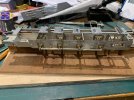
. But it’s no big deal and can soon be filled with solder or filler. On this photo of the outside of the frame you can see the horn guide sits flush with the face of the frame, and also you can make out the marking on the Slaters guide as an aid.
3 LINK
Western Thunderer
Now I have a rolling chassis, I decided to make up the cylinders and slide bars. All straight forward using normal methods of construction, the slide bars and cross heads needed some fettling to achieve a nice sliding fit, but this is normal with most of the kits I’ve built in the past. The built up cylinders just slide into slots in the chassis, and are a nice firm fit. You have the option to solder them in place permanently but I like them to be removable just in case I need to carry out any additional work or repairs. I also made up the pony truck, and on a trial fitting the flange on the wheels were rubbing on the chassis. This is mentioned in the instructions and was soon sorted out with a bit of filing.
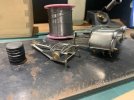
Martyn.
Martyn.
3 LINK
Western Thunderer
Next up a trial fitting of the cylinders, followed by the connecting rods. All went well with no tight spot’s between the connecting rods and cross heads. The bracket on the side of the chassis is the housing for the vacuum pump, this is easy to align up with the cross head, and I will fit the actuating rod later in the build.

Martyn.
Martyn.

Dan Randall
Western Thunderer
Nice work so far Martyn, but is it an optical illusion, or do the cylinders stick out too far and/or at the wrong angle?
Regards
Dan
Regards
Dan
3 LINK
Western Thunderer
Nice work so far Martyn, but is it an optical illusion, or do the cylinders stick out too far and/or at the wrong angle?
Regards
Dan
Hi Dan,
Just the camera angle regarding the cylinders sticking out, I have just pushed her along the platform edge on Church Norton and the clearance is fine. In the photo below the plate that holds the slide bar mounts is also connected to the cylinders and is a loose fit at the moment and it just needed a prod down with my finger, you can just see the slight gap I’m on about on the right side. Also the front guard irons look like they are tilting backwards but that’s also down to my iPhone
.
Martyn.
Dan Randall
Western Thunderer
Hi Martyn
That’s good news then! They look fine in the latest photo.
Regards
Dan
That’s good news then! They look fine in the latest photo.
Regards
Dan

john lewsey
Western Thunderer
Hi Martyn, this is looking very nice.
John
John
3 LINK
Western Thunderer
Cheers John,Hi Martyn, this is looking very nice.
John
Apart from my own modifications, I am finding it a very enjoyable kit to build. The etchwork is first class, and so far everything fits with very little fettling. I have built some of Scorpio’s rolling stock before, but this is the first loco I have built from them. And Jeff’s etch work is up there with the best of the kit suppliers.
Martyn.
3 LINK
Western Thunderer
Talking of etchings, the footplate body is in nickel silver and it folds up into a very sturdy base and the way it folds up there is no twist or distortion.
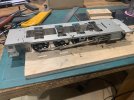
Next up is a brass etch again nicely detailed and crisp of the main footplate. Oh and I have fitted the buffers as I find they are easier to fit at this stage.
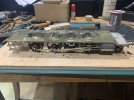
Martyn.
Next up is a brass etch again nicely detailed and crisp of the main footplate. Oh and I have fitted the buffers as I find they are easier to fit at this stage.
Martyn.

simond
Western Thunderer
And means that you can play with it….Oh and I have fitted the buffers as I find they are easier to fit at this stage.

that footplate is really nice. I’m enjoying the build.

which motor-gearbox?