The other model for me was the star of the show, I found it early on and the short conversation between seeing and emptying my wallet was extremely swift.
I recognized it was a N&W A class (a very prominent anorak in my US closet) but the detail was just too good for the normal brass import offerings, therefore the first question was who made it, the reply was PSM, now the heart rate is increasing......so, how much and does it have the original box?
To you sir $xxx and yes, it's fully boxed..... to be fair I kinda didn't hear what he said to begin with so asked again and it was the same figure

....holly smolly..... that's a bargain I shouldn't really afford but there's no way on this planet it's not going in my suitcase, okay, do you take credit card? Of course we do!
So in the space of about 45 seconds I'd gone from ambling around as a spectator thinking there was little to interest me (I'm more diesel 1990 plus sort a guy) to burning a big hole in the wallet and walking out with 6Kg of brass model I never even knew existed, but if I had would have made it my life's ambition to acquire. You don't get many Easter eggs like this in a life time.
So what did we get then, well it's a N&W A class, considered by many as one of the most powerful steam locos ever built, you have to be wary when folks quote power and which is the greatest, typically the Big Boy is ranked top but some favor the N&W Y6 or C&O Allegheny, the later two are good in the hills when speed is slow and tonnage high and requires adhesion, the Big Boy tends to favour speed and high tonnage on relatively lower grades and that's exactly what the A class is for as well. Typically 'Tide Water' near flat level running with high tonnages, so they don't need as much adhesion and their power is used to gain higher speeds running from the hills to the discharge ports.
The engines are coal burners (as you would expect for a Railroad deep in coal country) and often towed an additional water tender to reduce stops along the way.


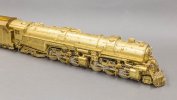
There's a screw auger in the base of the tender hopper and connections for a flexible connection between engine and tender.


There's something amiss with the ride height of the tender or engine, I need to look into this as it's clear the cab roof is too low and the fall plate sits at a jaunty angle.


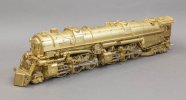
There is some damage as you'd expect from a model 46 years old (original receipt was in the box from 1982), some has been repaired but they've not taken the lacquer off so the joint is not the best it could be and the surrounding lacquer has boiled and darkened and will not be a good paint base.
The plan here is for a full strip down, cleansing of all lacquer, repair the damaged areas and clean up, add a few missing details (generally very little on PSM models to be fair) and rebuild. I'll also redo the leading engine live steam pipes, they're a bit under nourished and designed for Xmas tree curves, a better designed ball joint and pipe stem will make a big difference. It'll also get a coat of paint, decals and then some sympathetic weathering to bring out the details.
On the whole N&W kept their engines reasonably clean so it'll be a light weathering exercise.
All in all, very pleased with this model in my collection.








 ) in the box whilst I get on with life.