Mike Trice
Western Thunderer
Hands up those who remember the old B.S.L (later Phoenix, not to be confused with Phoenix Precision Paints) Coach kits from yesteryear? No longer available other than secondhand they were simplistic by today’s standards but many modellers used them to provide prototypical trains for their layouts at a time when there was little alternative.
If you try and find information about these kits there is very little out there, so I thought it might be fun to create a topic dedicated to them on WT. I will try and cover a bit of history relating to these kits and even have a go at building a few.
This first post covers their history as I perceive it, following posts will show the way the kits changed over time. There will be photos, I promise, just not for this initial introduction.
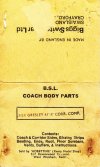
At some point in late 1967 Ron Colman launched the B.S.L. range of 4mm coach kits through Hobbytime of West Wickham. The B.S.L. stands for Biggs Switchgear Limited which from recollection produced fabricated aluminium electronic chassis parts as its main business. Branching out into coach kits I suspect was a side line.
I have a soft spot for these kits as I worked as a Saturday assistant at Hobbytime around that time and I can well remember a display cabinet on the wall showing made up samples from the range made, I believe, by Albert Goodall.
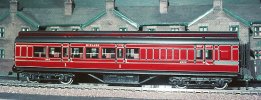
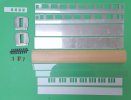
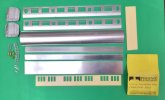
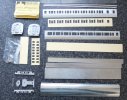
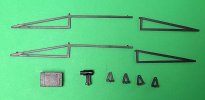
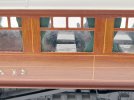
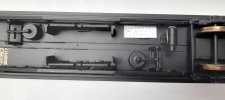
By today’s standards the kits were quite basic featuring stamped aluminium sides to the appropriate profile, floors, cast whitemetal ends and wooden roofs. As initially launched these were body only kits, bogies and underframe fittings etc had to be sourced elsewhere. Assembly was by Evostik and/or Epoxy.
Before continuing I need to try and put these in context with what was available in 1967. This was before etched kits were available so the likes of Comet Coaches where still some years off (mid 1980’s). On the market were a few moulded plastic offerings from K’s and I think Ratio, metal stampings from MTK and some wooden kits from King’s Cross and CCW. Ambrico, Mopok and MAJ. Hamblings had various lithographs for various coaches and a range of parts to suit. The PC Methfix range of transfers existed (I think their coach kits were later) but Precision Paints (later to become Phoenix Precision Paints) had yet to be launched in 1972. Adrian Swain’s range of ABS castings were available. If I have missed any out, I apologise, as my memory is not what it used to be.
When originally launched the aforementioned Hobbytime were the main distributor although in later years Eames certainly stocked some of the kits. The first kits released were various LNER Gresley 61’6” types (probably the least suited to the punched sides lacking beading), quickly followed by one GWR and one SR type per month with the LMS bringing up the rear. Hobbytime’s owner Denis Hextall was a GWR man which probably explains the push to introduce the GWR kits. Albert Goodall was a friend of the shop and subsequently had an article published in the January 1968 edition of Model Railway Constructor on building the kits.
The kits went through a number of iterations and improvements starting with the B.S.L. name and subsequently dropping it for them to become Phoenix Railway Carriage Components. At some point Hobbytime were no longer involved which might have coincided with the passing of Denis Hextall and the closing of the shop.
At this stage I must mention Derek Lawrence and Lawrence Scale Models. Derek would make up the kits and them farm them out to professional painters, such as our own @LarryG (Larry Goddard). These still regularly appear on auction sites and tend to command reasonable prices. I say reasonable as I suspect commissioning a professional to build and paint them to the same standard would be quite pricy. My understanding from Larry is that Derek encouraged Ron to expand the range of prototypes in the range until there were way over 100. MJT did supply detailing parts to Derek in later years so some do appear under his later coaches. I have a couple of Derek’s coaches in my collection which I will show in a subsequent post.
In later years Ron approached me (when I was trading as MJT) to produce some of his castings for him. He had a number of casters that he used as he saw fit. One day he showed my how the kits were made. Blank sides were guillotined then placed in a jig. A matching die and punch for a specific window was loaded in a fly press and the window punched. The side was then indexed along and another window punched. When a door or different window was required the punch had to be changed and the new aperture produced. Ron kept extensive notes on which punch and its relative position to the side was needed. It sounds tedious but I suspect producing a batch of kits of similar types minimised the need to keep changing the punch tool. It was this standardisation of window/door types that allowed Ron to satisfy Derek’s request to produce more types.
On Ron’s retirement the whole shebang passed into the stewardship of the Southern Railways Group. Unfortunately time was not on their side as the rapid growth of etched brass kits resulting in falling demand, and the fact the punch tools were reaching their life span has meant the kits are effectively discontinued.
A lot of the above was written from memory which might be faulty. If anyone can add to the story please feel free to contribute.
If you try and find information about these kits there is very little out there, so I thought it might be fun to create a topic dedicated to them on WT. I will try and cover a bit of history relating to these kits and even have a go at building a few.
This first post covers their history as I perceive it, following posts will show the way the kits changed over time. There will be photos, I promise, just not for this initial introduction.
At some point in late 1967 Ron Colman launched the B.S.L. range of 4mm coach kits through Hobbytime of West Wickham. The B.S.L. stands for Biggs Switchgear Limited which from recollection produced fabricated aluminium electronic chassis parts as its main business. Branching out into coach kits I suspect was a side line.
I have a soft spot for these kits as I worked as a Saturday assistant at Hobbytime around that time and I can well remember a display cabinet on the wall showing made up samples from the range made, I believe, by Albert Goodall.
By today’s standards the kits were quite basic featuring stamped aluminium sides to the appropriate profile, floors, cast whitemetal ends and wooden roofs. As initially launched these were body only kits, bogies and underframe fittings etc had to be sourced elsewhere. Assembly was by Evostik and/or Epoxy.
Before continuing I need to try and put these in context with what was available in 1967. This was before etched kits were available so the likes of Comet Coaches where still some years off (mid 1980’s). On the market were a few moulded plastic offerings from K’s and I think Ratio, metal stampings from MTK and some wooden kits from King’s Cross and CCW. Ambrico, Mopok and MAJ. Hamblings had various lithographs for various coaches and a range of parts to suit. The PC Methfix range of transfers existed (I think their coach kits were later) but Precision Paints (later to become Phoenix Precision Paints) had yet to be launched in 1972. Adrian Swain’s range of ABS castings were available. If I have missed any out, I apologise, as my memory is not what it used to be.
When originally launched the aforementioned Hobbytime were the main distributor although in later years Eames certainly stocked some of the kits. The first kits released were various LNER Gresley 61’6” types (probably the least suited to the punched sides lacking beading), quickly followed by one GWR and one SR type per month with the LMS bringing up the rear. Hobbytime’s owner Denis Hextall was a GWR man which probably explains the push to introduce the GWR kits. Albert Goodall was a friend of the shop and subsequently had an article published in the January 1968 edition of Model Railway Constructor on building the kits.
The kits went through a number of iterations and improvements starting with the B.S.L. name and subsequently dropping it for them to become Phoenix Railway Carriage Components. At some point Hobbytime were no longer involved which might have coincided with the passing of Denis Hextall and the closing of the shop.
At this stage I must mention Derek Lawrence and Lawrence Scale Models. Derek would make up the kits and them farm them out to professional painters, such as our own @LarryG (Larry Goddard). These still regularly appear on auction sites and tend to command reasonable prices. I say reasonable as I suspect commissioning a professional to build and paint them to the same standard would be quite pricy. My understanding from Larry is that Derek encouraged Ron to expand the range of prototypes in the range until there were way over 100. MJT did supply detailing parts to Derek in later years so some do appear under his later coaches. I have a couple of Derek’s coaches in my collection which I will show in a subsequent post.
In later years Ron approached me (when I was trading as MJT) to produce some of his castings for him. He had a number of casters that he used as he saw fit. One day he showed my how the kits were made. Blank sides were guillotined then placed in a jig. A matching die and punch for a specific window was loaded in a fly press and the window punched. The side was then indexed along and another window punched. When a door or different window was required the punch had to be changed and the new aperture produced. Ron kept extensive notes on which punch and its relative position to the side was needed. It sounds tedious but I suspect producing a batch of kits of similar types minimised the need to keep changing the punch tool. It was this standardisation of window/door types that allowed Ron to satisfy Derek’s request to produce more types.
On Ron’s retirement the whole shebang passed into the stewardship of the Southern Railways Group. Unfortunately time was not on their side as the rapid growth of etched brass kits resulting in falling demand, and the fact the punch tools were reaching their life span has meant the kits are effectively discontinued.
A lot of the above was written from memory which might be faulty. If anyone can add to the story please feel free to contribute.